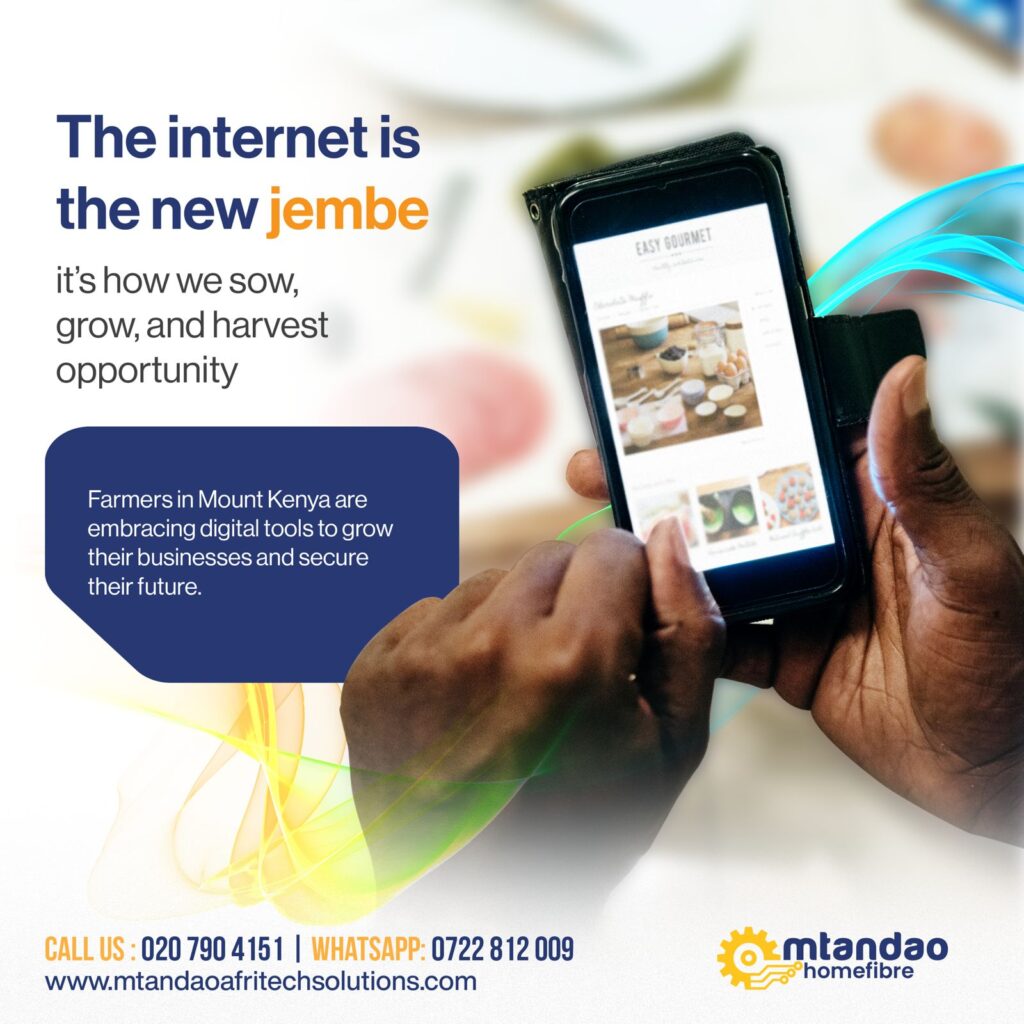
How Mount Kenya Farmers Are Growing with the Internet.
In the shadow of Africa’s second-highest peak, farmers in the Mount Kenya region are discovering new ways to grow their businesses—beyond the soil and into the digital world. With access to reliable Wi-Fi and basic digital tools, these farmers are transforming traditional agriculture into smart, data-driven enterprises. This blog explores how internet access is changing lives in rural Kenya and how other farmers can follow the same path to success.
The Internet: A Game Changer for Mount Kenya Farmers
Traditionally, farmers relied on word-of-mouth, local markets, and physical extension services for information. Today, Wi-Fi access has made the world a global village, even in remote areas like Meru, Nyeri, and Embu. Here’s how:
1. Access to Market Information
With just a smartphone and a stable internet connection, farmers can now:
- Check daily market prices for crops and livestock.
- Compare trends across counties to sell at the most profitable locations.
- Join WhatsApp and Facebook groups to link with buyers directly—cutting out the middleman.
Tip: Platforms like Mkulima Young and Twiga Foods are great for connecting to buyers.
2. Weather Forecasting and Crop Planning
Accurate weather data helps farmers plan when to plant, irrigate, or harvest. Apps like:
- aWhere
- WeFarm
- Weather.com
offer up-to-date weather forecasts, helping farmers reduce risks from unpredictable rainfall or droughts.
Use Case: A farmer in Nanyuki avoided crop failure by adjusting planting time based on satellite forecasts from an agriculture app.
3. Learning and Training Resources
Farmers now access tutorials and free courses online to improve their skills. They can:
- Watch YouTube tutorials on organic farming, poultry management, and greenhouse setup.
- Read blogs and forums like AgriFarming, Kenya Agricultural Livestock Research Organization (KALRO) updates, and FAO guides.
- Enroll in online agriculture programs from local and international institutions.
Pro Tip: Try sites like Coursera, Shamba Shape Up, or Google Digital Skills for Africa for free and practical lessons.
4. Financial and Government Services
The Kenyan government and financial institutions are digitizing services for rural farmers:
- Apply for government subsidies and loans via platforms like eCitizen.
- Use M-Pesa and mobile banking for secure transactions.
- Access insurance services like Acre Africa to protect against crop failure.
5. Digital Marketing and Branding
Farmers are building brands for their products and reaching broader markets through:
- Instagram and TikTok to showcase farm produce and engage with customers.
- Simple websites or e-commerce platforms to sell products directly to consumers.
- Google My Business to improve their farm’s online visibility.
Example: A dairy farmer in Kirinyaga built an online brand and now supplies yoghurt to urban clients via Instagram.
Why Having Wi-Fi Is Essential in Modern Farming
Wi-Fi isn’t just for entertainment—it’s a critical business tool in 2025. Here’s why farmers should invest in it:
- Cost-effective: Shared community Wi-Fi or rural ISPs like Mawingu Networks offer affordable plans.
- Efficiency: Reduces trips to towns for information or banking.
- Empowerment: Builds digital literacy and opens doors to global knowledge.
Take Home;
The internet is no longer a luxury—it’s a necessity for modern agriculture. In Mount Kenya, digitally connected farmers are seeing increased productivity, better market access, and improved livelihoods. With the right digital tools, Wi-Fi connection, and willingness to learn, any farmer—regardless of age or education—can thrive in the digital age.